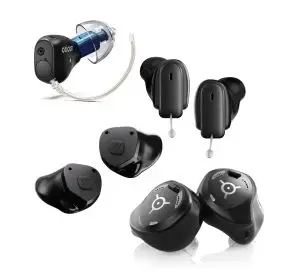
One of the most common things we hear from newer hearing aid users is some version of: “I can hear that someone is speaking, but still I don’t understand what they’re saying.” It’s an honest expectation, and one worth unpacking before it leads to frustration or giving up entirely.
The truth is, hearing aids are a powerful tool. But they are an aid, not a cure. Understanding the difference between simply hearing sound and actually understanding speech is the first step toward getting the most out of your devices, and out of your life.
The Glasses Comparison… and Why It Falls Short
Many first time hearing aid wearers want to compare hearing aids to glasses. Both are worn on your face. Both are not covered by Medicare. Both help with a sensory challenge. Both require an adjustment period. So it seems logical that hearing aids would work like eyeglasses: put them in, and things snap back to normal.
But the comparison breaks down at a fundamental level:
Eyeglasses
Correct a refractive error, the way your eye bends light. With the right prescription, your vision is restored to normal or near-normal. You read the bottom line on the chart.
Eyeglasses are also made up of glass and plastic, they do not contain all the necessary technology and parts that make up a hearing aid. This makes them more affordable and accessible and easy for people to rationalize purchasing.
Hearing Aids
Amplify and process sound, but they cannot rebuild the damaged hair cells in your inner ear. They make sound more accessible, but they do not restore your hearing to what it once was.
Hearing loss isn’t just about volume, it’s about clarity. Even with perfectly fitted hearing aids, a noisy restaurant or a crowded family gathering can still be genuinely challenging. That’s not a device failure. That’s the nature of sensorineural hearing loss, and understanding it changes everything about how you approach your hearing journey.
Hearing aids don’t give you back the hearing you had. They give you a fighting chance with the hearing you have.
A Better Analogy: The Crutch
Imagine you’ve injured your leg. Without any support, getting around is painful, slow, or impossible. You might stay home. You might stop doing things you love. You pull back from the world because the world suddenly feels too difficult to navigate.
Now add crutches. Are you running a 5K? No. Are you climbing a ladder? Probably not. But can you get to the kitchen, get to your car, attend your grandson’s birthday party? Yes. The crutches don’t fix the injury, but they restore your ability to participate in life. They give you back your independence and your presence.
Hearing aids work exactly the same way.
Without hearing aids, many people quietly withdraw. They stop going to dinners because they can’t follow the conversation. They turn down invitations because the effort of pretending to hear is exhausting. They become isolated. Not because they want to be, but because participating feels impossible. Research consistently links untreated hearing loss to cognitive decline, depression, and social isolation.
With hearing aids, life opens back up. Not perfectly, but meaningfully.
What Hearing Aids Actually Do For You
When expectations are realistic, hearing aid success rates go up dramatically. Here’s what you can and should expect from a well-fitted pair of hearing aids:
- Bring you back into one-on-one and small group conversations
- Make TV, phone calls, and podcasts accessible again
- Reduce the mental fatigue of straining to hear all day
- Help you participate in family life without constantly asking people to repeat themselves
- Give you a foundation to layer on additional strategies and assistive devices
Noisy environments will still be harder than quiet ones. That’s true for most hearing aid users, and it’s not a sign that something is wrong. It’s even true for many people without hearing loss. Noise is always going to make a listening situation more difficult. What matters is that you’re in the room and there to be present, engaged, and connected.
Building on the Foundation
One of the most empowering mindsets in hearing care is this: hearing aids are a starting point, not a finish line. Once you have that foundation, there’s a whole toolkit available to handle the situations that are still difficult.
Captioning apps can help in meetings or on video calls. TV streamers bring audio directly to your hearing aids without everyone else needing to raise the volume. Remote microphones let a spouse or friend clip a mic to their lapel at a noisy dinner, sending their voice directly to your ears. Auditory rehabilitation programs can help retrain your brain to focus on the important signal coming in and ignoring the extraneous noise. Listening strategies, such as positioning yourself to see faces, managing background noise, and advocating for your needs, etc., can also significantly improve your experience over time.
Hearing aids open the door. What you do with that door is up to you.
The goal isn’t perfect hearing. The goal is a full life, and hearing aids are one of the most important tools in getting you there.
Meeting You Where You Are
We believe in choice, affordability, and honest conversation. That means we’re not going to tell you that any hearing aid will make everything perfect. But we will tell you that the right hearing aids, with the right expectations, can genuinely change your quality of life for the better.
If you’re newly exploring hearing aids, or frustrated because yours haven’t met the expectations you started with, we’d love to have a conversation. Because hearing better isn’t just about decibels. It’s about staying connected to the people and moments that matter most.